🥇 This project won 1st Place at the 2025 Mosaic Innovation Challenge!
UClubs is a mobile application that streamlines the coordination of university clubs. By combining club discovery, scheduling, project management, and communication tools into one cohesive space, club leaders can build a more active and engaged community.
THE PROBLEM
50% of university club members become inactive after their first semester
In an era of hybrid and remote collaboration, student organizations struggle with fragmented workflows. When important messages get buried in group chats, projects go unfinished, and new members feel disconnected, it's no wonder that engagement plummets at a staggering rate.
While platforms like Slack and Asana serve workplace needs, they weren't built with university clubs in mind. These organizations are volunteer-driven and student-run, so they need lightweight tools that support their academic commitments and require minimal training for rotating members.

Strengths
✓ Extensive features
✓ Scalable systems
Weaknesses
✕ Steep learning curve
USER RESEARCH
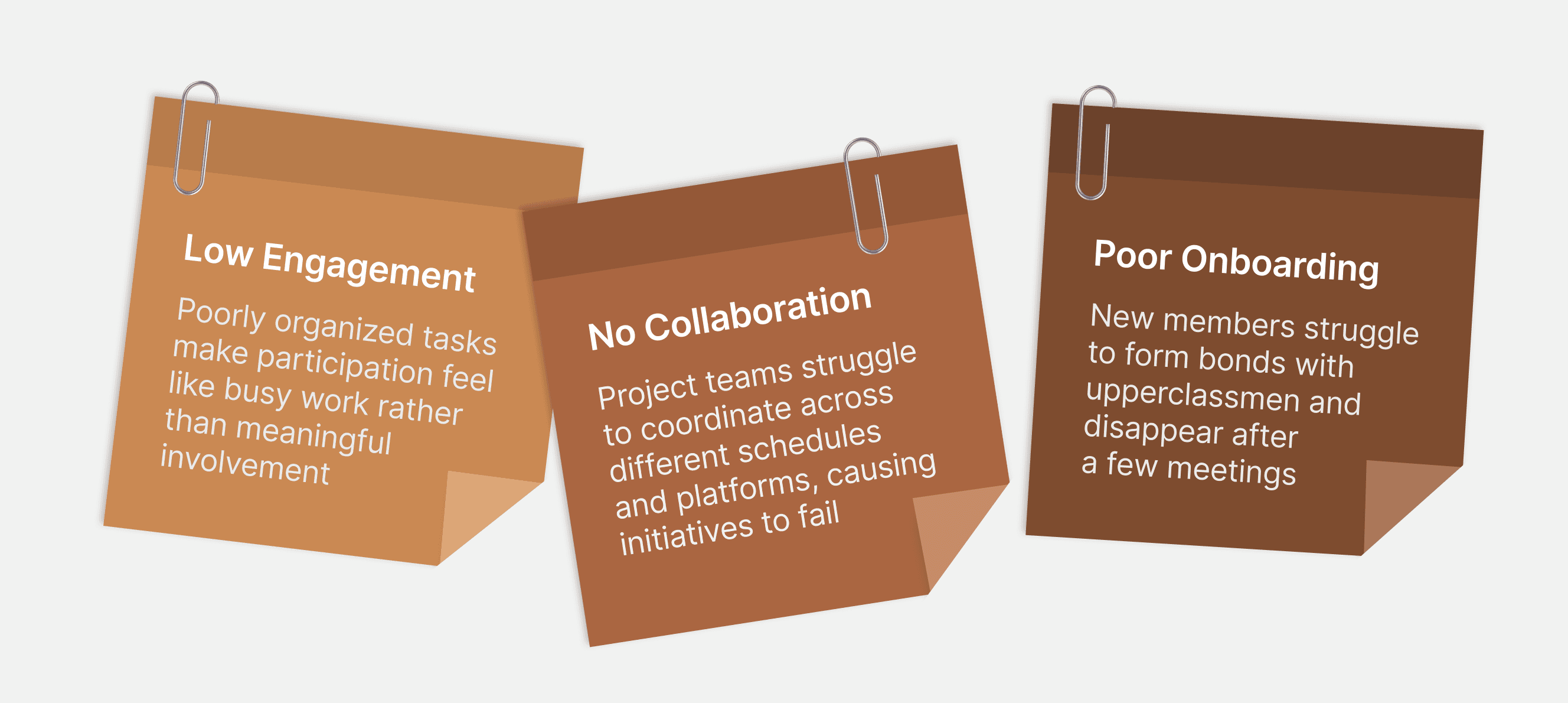
As first-year university students, we were eager to get involved in campus life. Despite joining clubs with genuine interest and excitement, we found ourselves becoming inactive within weeks. When we examined why, the same barriers kept surfacing:
IDEATION
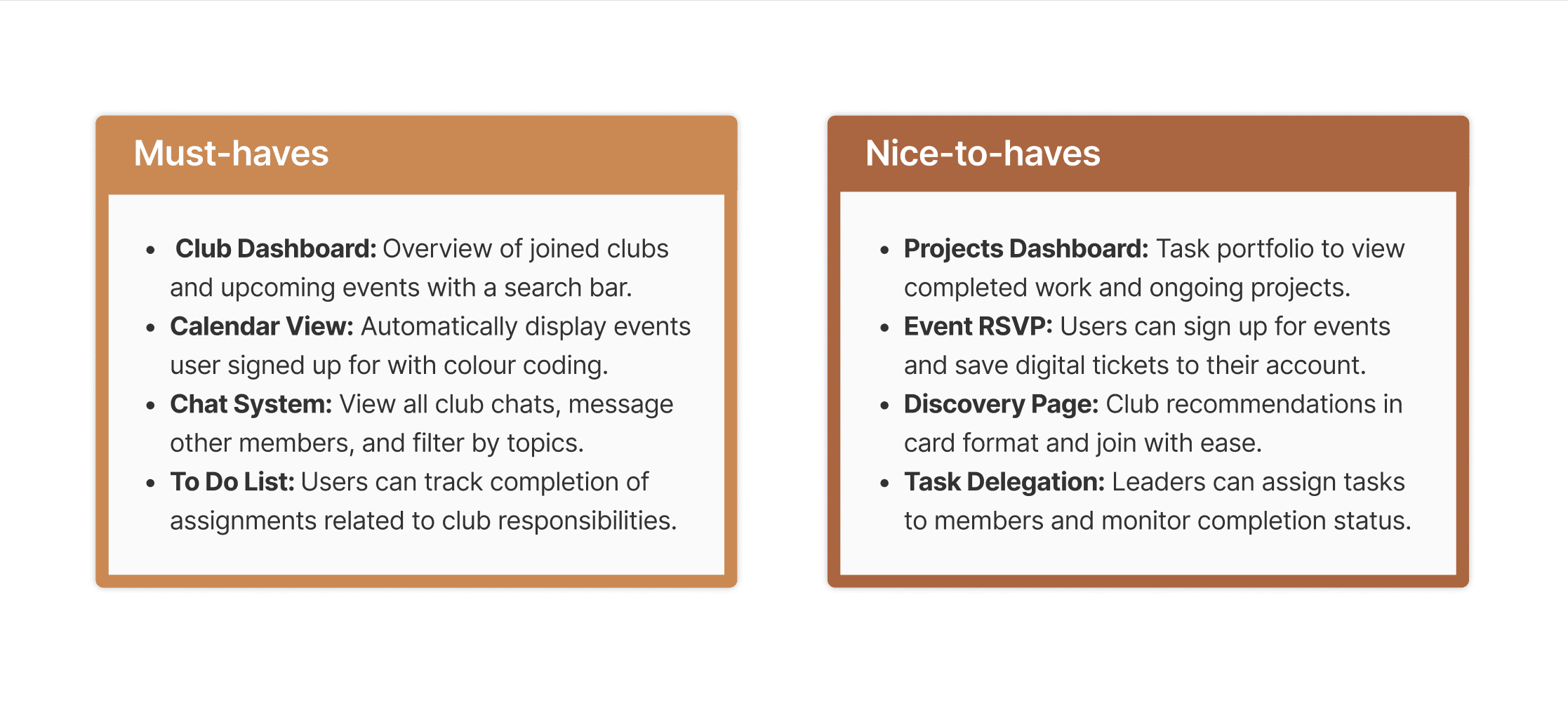
When mapping out the information architecture, we identified three key phases: discovery (finding and joining clubs), integration (new members becoming active participants), and contribution (managing tasks and joining initiatives).

LOW FIDELITY
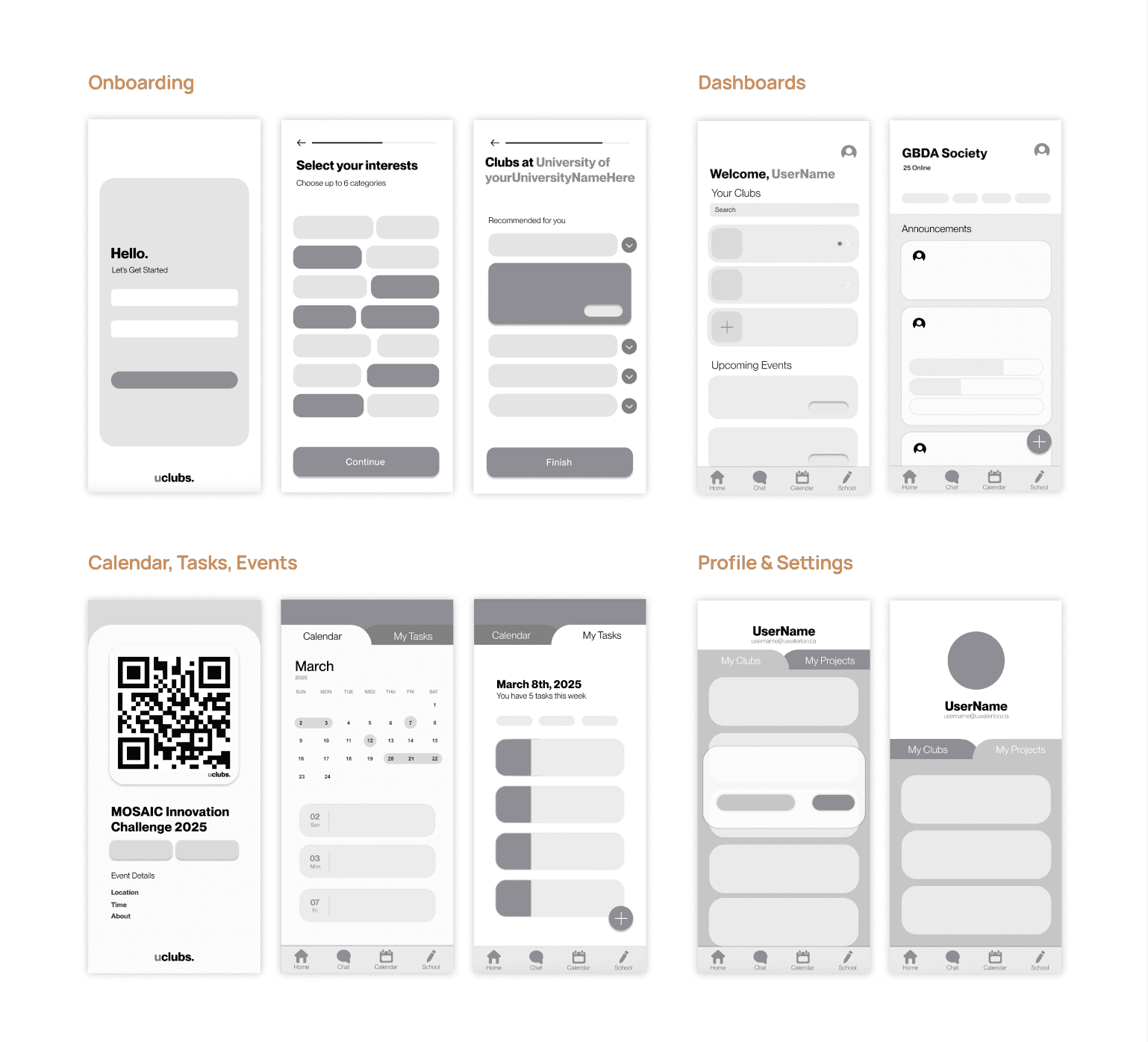
Given the time constraints of our designathon, we jumped into low-fidelity prototypes to test our core user flows and visualize the key screens.
FINAL DESIGN
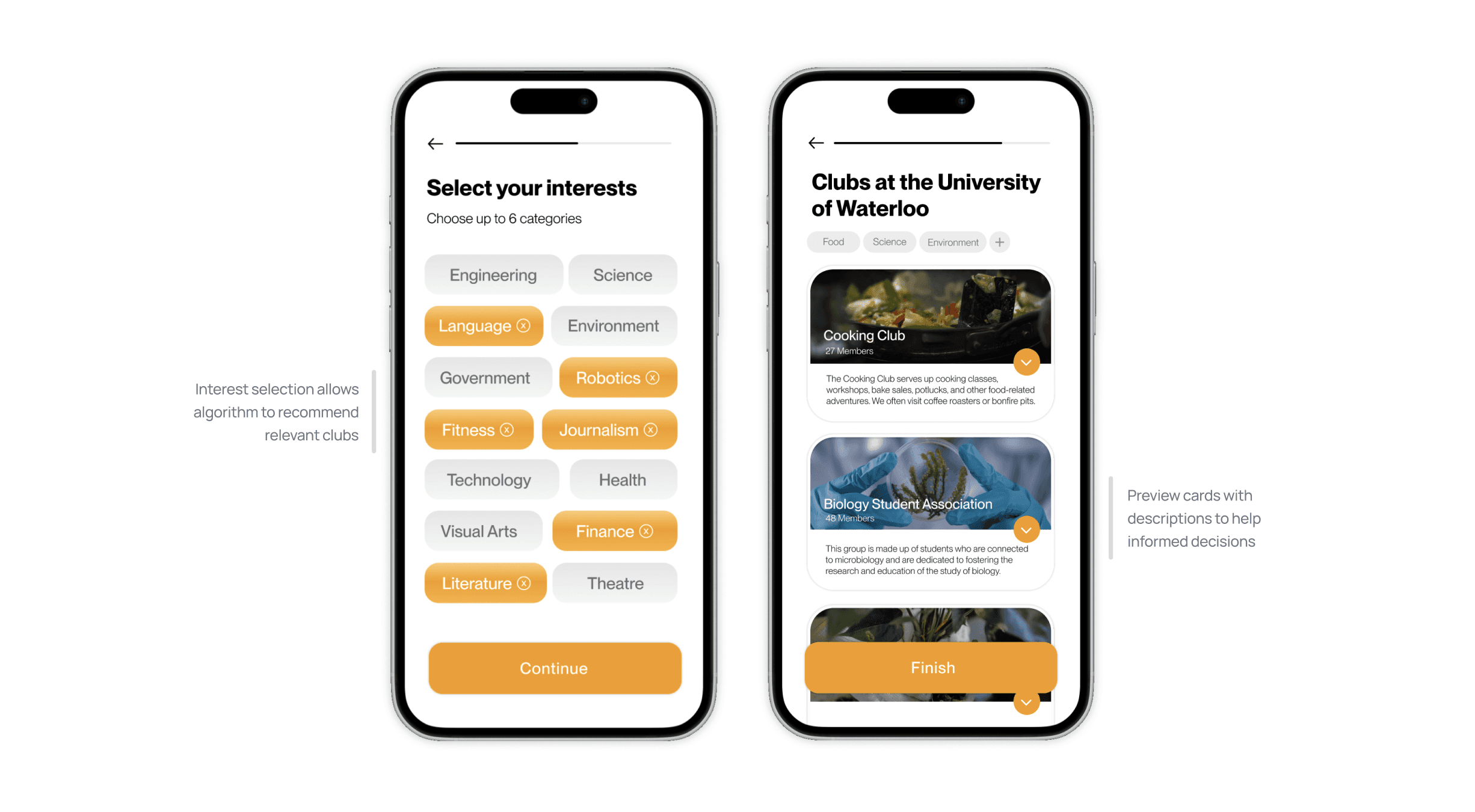
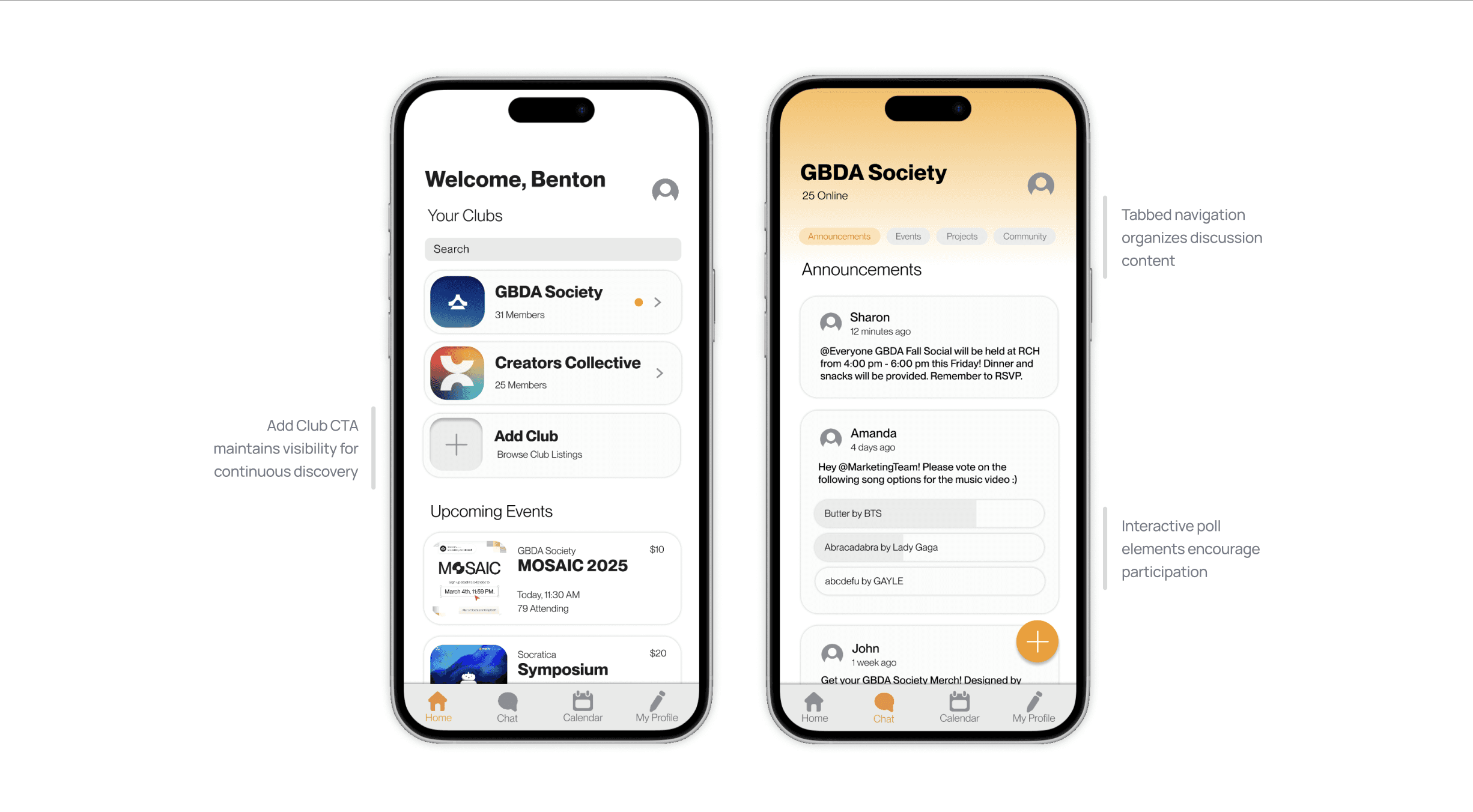
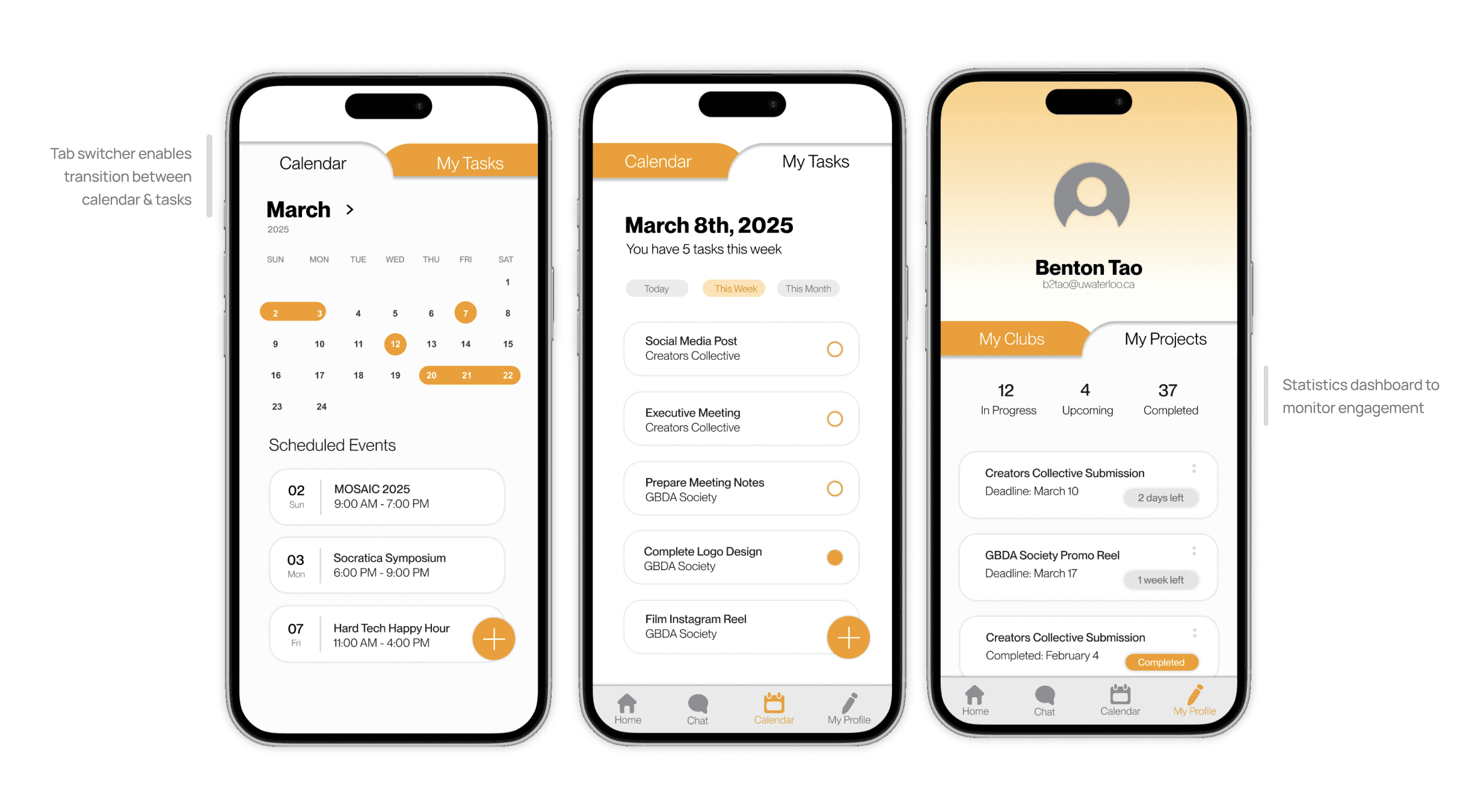

Start Building, Then Refine
Focus on developing a workable idea and improving it along the way. We spent almost two hours in the ideation stage which led to missed opportunities to iterate and polish our concept.
Narrow The Problem Scope
By narrowing the broad prompt of remote work to the context of university clubs, we grounded our concept in a setting we understood. This allowed us to propose more focused and realistic solutions.